Can I Use My Personal Mobile Number for Business in the UK?
Table of Contents
At the beginning, it feels completely sensible.
You start a business.
A customer asks for your number.
You give them the number you already have.
Why wouldn't you?
It costs nothing extra. Your mobile is always with you. You can answer calls wherever you are.
Then the business starts growing.
Your number goes on your website.
Then Google.
Then your invoices.
Then your van.
Then your social media profiles.
Then a customer calls at 9:37 on a Sunday evening.
And suddenly you realise something.
Your personal mobile number is not very personal anymore.
Can You Use a Personal Mobile Number for Business in the UK?
Yes.
For a sole trader, freelancer or small-business owner, there is nothing inherently unusual about using a personal mobile number for business. Many people start this way because it is simple and familiar. Current UK guidance aimed at small businesses also recognises that using a personal mobile for business is common.
The question is not really whether you can.
The better question is:
Will you still want customers using that number two years from now?
That is where things become more interesting.
It Usually Starts With Convenience
Imagine Marcus.
He has just started his own plumbing business.
His first few customers come through friends and family.
He puts his personal mobile number on a basic website.
Business improves.
He adds the number to Google.
He prints it on the van.
It appears on invoices, directories and local adverts.
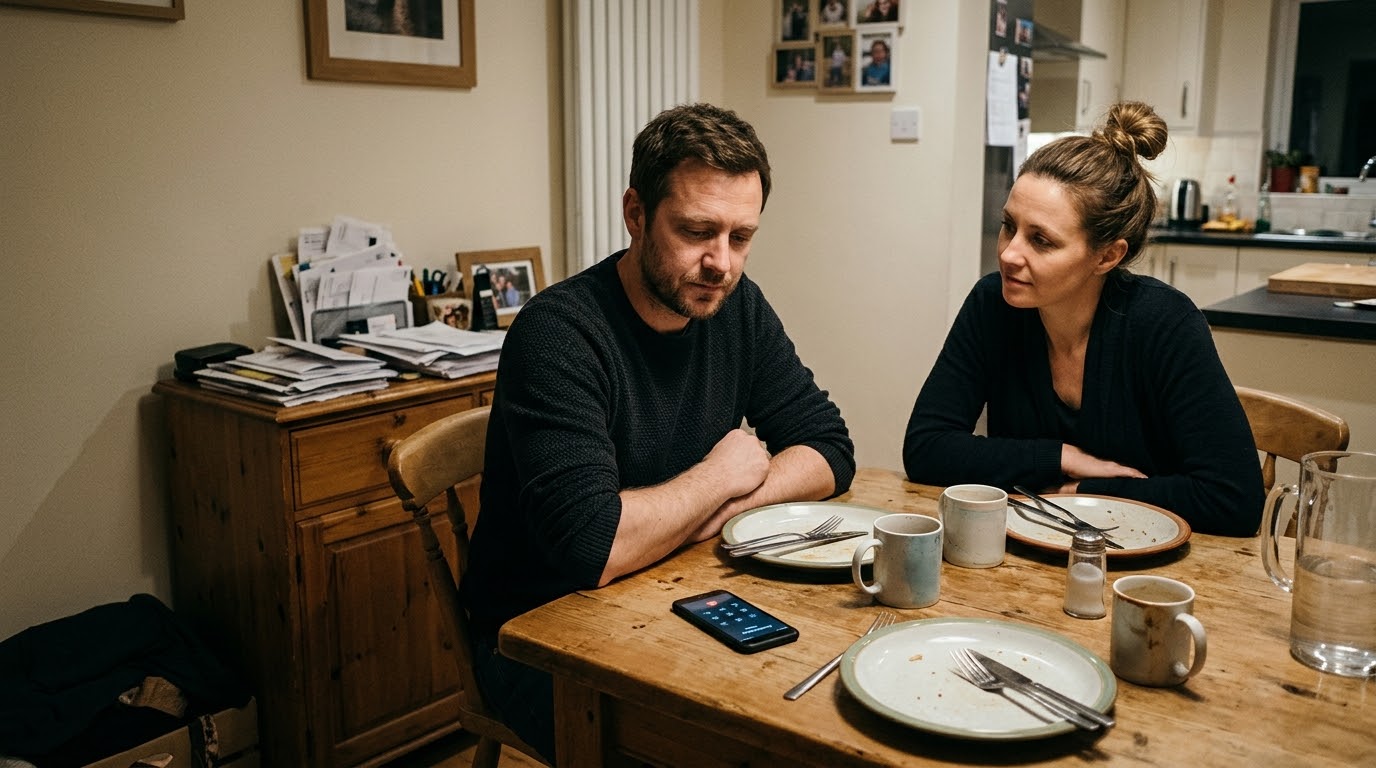
Six months later, Marcus is sitting down to dinner when his phone rings.
“Hi, is that Marcus Plumbing? I've got a leaking tap.”
The customer has done absolutely nothing wrong.
They found a business number and called it.
The problem is that Marcus never really created a business number.
He simply turned his personal one into one.
Once Your Number Is Public, It Is Public
This is something new business owners often do not think about.
Your mobile number may have started as something you shared with family and friends.
Once you use it publicly for business, it can appear across websites, directories, advertisements, customer phones and old documents for years.
You can change the number later.
But changing a number after customers have learned it creates another problem.
Who needs to be updated?
Your website.
Your Google listing.
Customers.
Suppliers.
Business cards.
Directories.
Advertising.
Invoices.
Potentially hundreds of people who saved the old number years ago.
A dedicated business number gives the company a stable public contact point that does not have to be permanently tied to one person's private handset. Current UK business telecom guidance makes the same point: a public business number can remain consistent even when the device, employee or answering location changes.
“I Don't Want to Carry Two Phones”
You do not have to.
This is probably the biggest misunderstanding around having a separate business number.
A separate number does not necessarily mean:
- a second smartphone,
- another SIM contract,
- a desk phone,
- or walking around with two devices in your pocket.
A virtual business number can send incoming calls to the mobile you already use.
The customer calls the business number.
Your existing mobile rings.
Your personal mobile number does not have to be the number you advertise publicly.
That distinction sounds small.
In everyday life, it can feel enormous.
You Start Knowing Why the Phone Is Ringing
A personal phone rings and you wonder:
Is this Mum?
Is this the school?
Is this a customer?
Is this another spam call?
A business phone setup can create a clearer separation.
With Switchboard Solo, for example, a dedicated UK business number forwards incoming business calls to your existing mobile or landline. No additional hardware is required, and an app is not required simply to receive forwarded calls.
That means you can keep using the phone already in your pocket while giving customers a different public number.
The Bigger Issue Is Often Not Professionalism. It Is Boundaries.
People often talk about business numbers as though the main benefit is “looking professional”.
That matters.
But for many sole traders, the more human benefit is having a boundary.
When somebody runs a small business, there is often no receptionist protecting their time.
There is no customer service department.
There is no colleague saying:
“Marcus has gone home. He'll call you tomorrow.”
There is just Marcus.
And his phone.
If every customer has his private mobile number, work follows him into the kitchen, the school run, weekends, holidays and evenings.
Not because every customer is unreasonable.
Often they simply do not know.
From their perspective, they are calling the number printed on the business website.
Your Customer Does Not Know You Are “Off”
This is worth remembering.
If your website says:
Call 07...
there is nothing in that number that tells a customer:
“This is also the owner's private phone.”
A customer might see your business at 10pm while searching online.
They may think:
“I'll call quickly before I forget.”
You experience an interruption.
They experience contacting a business.
Neither person is necessarily wrong.
The system simply has no boundary built into it.
Business Hours Can Do Something Your Willpower Cannot
Most business owners tell themselves:
“I just won't answer after 6pm.”
Then the phone rings.
What if it is a £5,000 job?
What if it is a customer who has been waiting all day?
What if it is urgent?
So you look.
Then you answer.
A system with time-of-day routing can create the boundary automatically.
Switchboard Solo currently includes time-of-day routing, voicemail alerts and the ability to route business calls to an existing mobile or landline. The optional app can also be used for outbound calling so that customers see the business number rather than the user's personal mobile number.
The point is not to become unavailable.
It is to decide when you are available.
What Happens When You Hire Someone?
This is another reason the personal-number setup becomes awkward.
When you are the whole business, having every enquiry go to your mobile seems manageable.
Then you hire Sarah.
Customers still call you.
Then you hire David.
Customers still call you.
Then you are on holiday.
Customers still call you.
The business has grown, but the phone number has not grown with it.
Eventually the owner becomes the bottleneck.
A proper business number can later be routed differently as the company changes.
One person today.
Several people tomorrow.
A receptionist later.
A ring group.
An automated menu.
A different office.
The public number does not have to change simply because the people answering it do.
What About Employees Using Personal Mobiles?
This deserves more thought than it often gets.
Asking employees to use their personal numbers for customer calls can create privacy and data-handling concerns.
Recent UK legal guidance notes that employee personal telephone numbers are personal data and advises businesses using personal devices for work to consider ways of preventing staff members' private numbers being unnecessarily exposed to customers.
A separate business identity for calls can make that distinction clearer for both the employee and the customer.
Do Customers Care Whether You Have a Business Number?
Not every customer will refuse to call a mobile number.
Plenty will not care at all.
The stronger reason to have a business number is not pretending that a small business is a huge corporation.
It is giving the business an identity that belongs to the business.
Your website belongs to the business.
Your email domain belongs to the business.
Your customer list belongs to the business.
Your main public telephone number should ideally be able to stay with the business too.
What Is the Simplest Alternative?
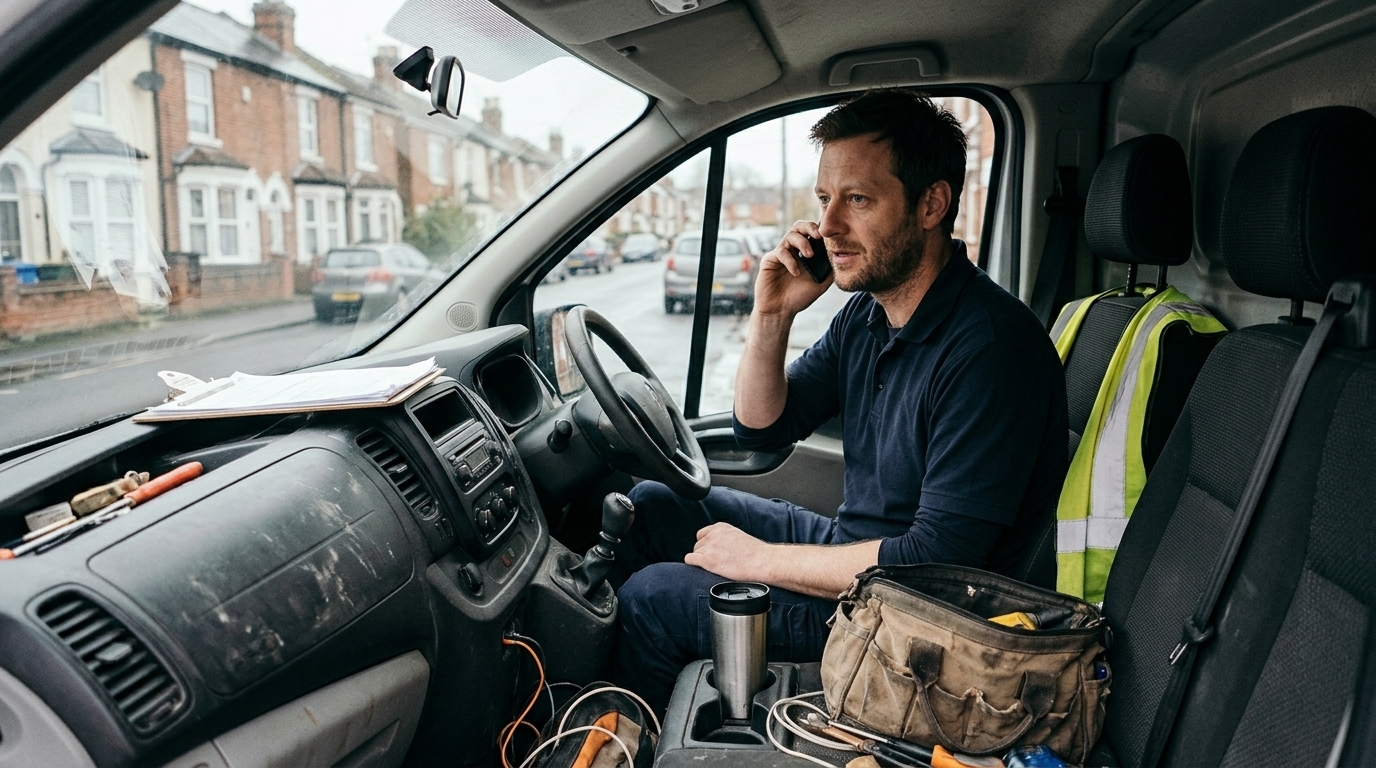
For a sole trader or small-business owner who does not want a traditional office phone system, a virtual business number is often the simplest route.
Switchboard Solo currently provides a dedicated UK business number that can forward calls to an existing mobile or landline.
You can choose a UK area code or national number, and the service is currently priced from £7.99 per month. Switchboard says most Solo setups can be completed in around five minutes.
You keep the phone you already know.
You keep your existing SIM.
You keep your personal number for the people who actually need it.
Customers get the business number.
So, Should You Stop Using Your Personal Mobile Number?
If you have just started and three customers have your mobile number, there is no need to panic.
But ask yourself one question:
If the business becomes exactly as successful as I hope it will, do I want hundreds of customers to have this number?
If the answer is no, separating the numbers earlier is usually easier than trying to untangle them later.
Your personal phone can still be the device you use for work.
It simply does not have to give every customer your personal number.
Same Phone. Different Number.
That is the idea.
You should not need a second pocket, another handset and a complicated phone system simply to separate work from personal life.
With Switchboard Solo, your dedicated business number can ring the mobile you already carry.
And when you call customers using the optional business app, your business number can be presented instead.
Same person.
Same phone.
A clearer line between work and home.
Switchboard.uk
Call: 020 7112 4927
Email: sales@switchboard.uk
Visit: switchboard.uk
Your business can have its own number without your life needing another phone.